CUYUNA REGIONAL MEDICAL CENTER
Created a More Connected Interventional Spine Patient Journey
PROJECT GOAL
Improve the Interventional Spine Patient Journey and Increase Awareness of Services
The goal was to help patients feel more comfortable and informed throughout their Interventional Spine journey—from the first phone call through treatment and follow-up care.
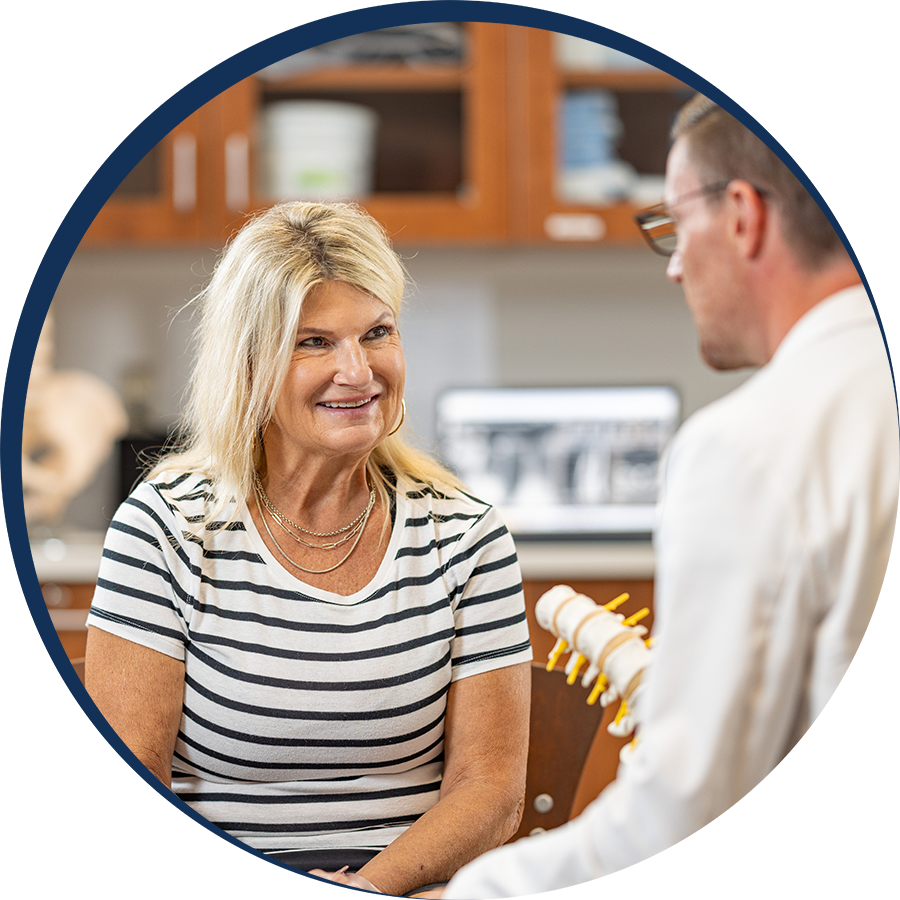
We also wanted to introduce the physicians as real people patients could connect with. Marketing content highlighted each physician’s personality and interests along with their expertise and experience, helping build familiarity and trust before a patient arrived for treatment.
Service Line: Interventional Spine
My role:
Fully owned the project from strategy through execution, including meeting schedules, agendas, follow-up notes, action items, timelines, and final deliverables.
Led meetings and kept physicians, nurses, marketing, strategic services, and orthopaedic leadership aligned on goals, responsibilities, and next steps.
Documented decisions, follow-up action items and addressed roadblocks.
Managed stakeholder deliverables, approvals, and deadlines while completing my own strategy and content responsibilities.
Art-directed third-party photographer
The challenges
There was no single, comprehensive view of the patient journey. Physicians and nurses understood their individual roles, but no one had mapped the entire experience. This included the initial phone call and scheduling process to appointment reminders, educational materials, procedure preparation, and follow-up information.
This created several challenges:
Some patients did not follow their pre-procedure instructions and had to reschedule. This delayed care and resulted in lost revenue.
Many patients were referred directly by a spine surgeon and did not meet their Interventional Spine physician until shortly before their procedure.
Although Interventional Spine treatments are non-surgical, many are performed in an operating room. Without knowing the physician or what to expect, patients often felt nervous or intimidated.
Stakeholders wanted to reduce printing by combining multiple treatment plans into a single document. However, this could overwhelm patients with information that did not apply to them. I advocated for providing only the information relevant to each patient’s condition and treatment.
The website separated surgical and interventional spine care, forcing patients to choose a direction before knowing which type of care they needed.
“Interventional Spine” was not a familiar term for many patients. I recommended using the more understandable phrase “Non-Surgical Spine” in patient-facing materials.
Determining the patient journey
I brought together the Interventional Spine physician and nurse, Director of Marketing, Director of Strategic Services, and Director of Orthopaedics to map the complete patient experience.
We reviewed every step, including:
The initial referral or phone call
Scheduling and appointment communication
Materials sent to the patient
Pre-procedure instructions
Appointment reminders
The experience on the day of the procedure
Follow-up care and education
Keeping the patient’s perspective at the center of the conversation was essential. I continually reminded stakeholders that the goal was not simply to provide more information, it was to provide the right information at the right time.
Deliverables
Once we understood the complete journey, I developed materials and marketing content to address the gaps we identified. It was important that all patient education be written at a seventh-grade reading level so the information was clear, approachable, and easy for patients and caregivers to understand.
What to Expect Brochure
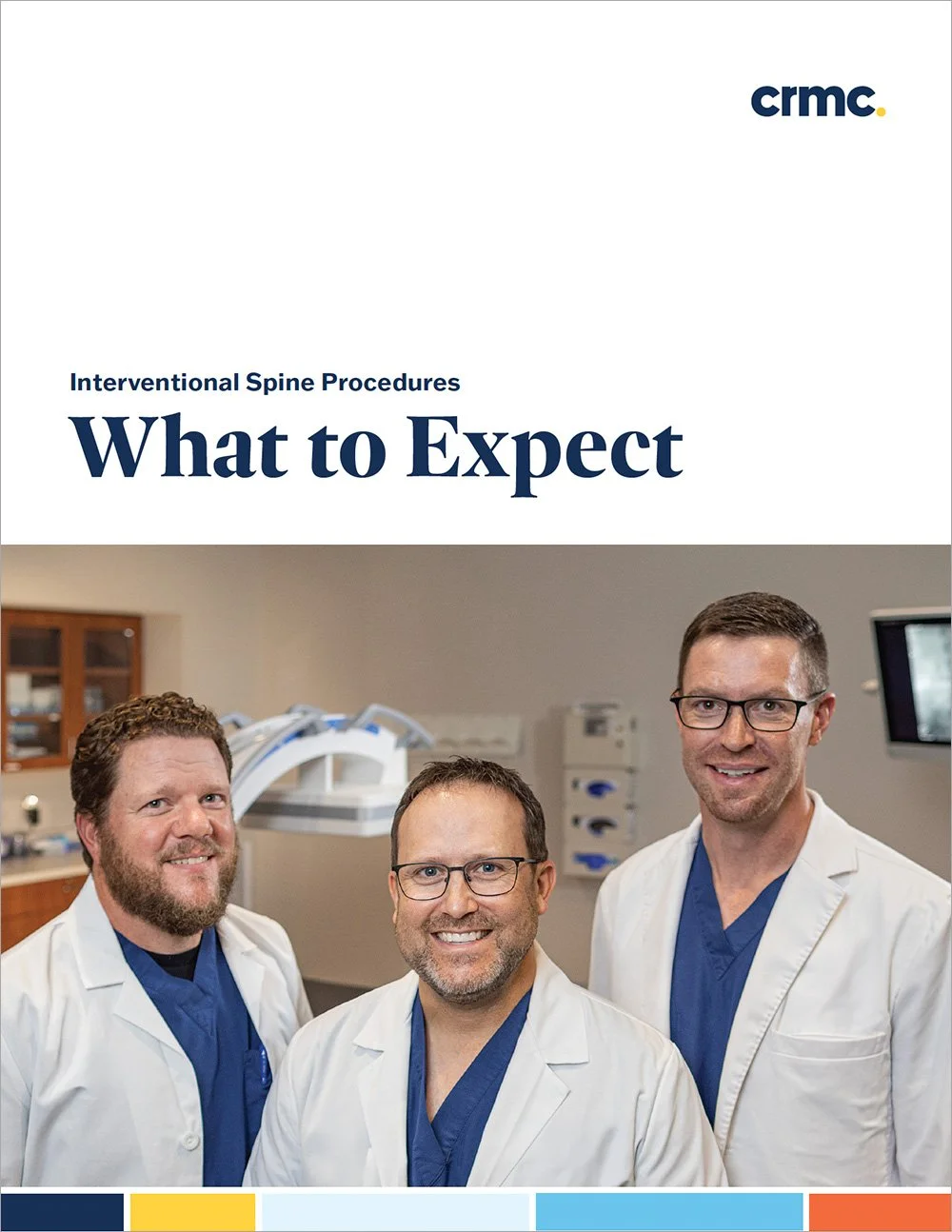
A comprehensive brochure was created to walk patients through their journey. It explains when they can expect a phone call, how appointment times will be communicated, how to prepare, and what will happen on the day of the procedure.
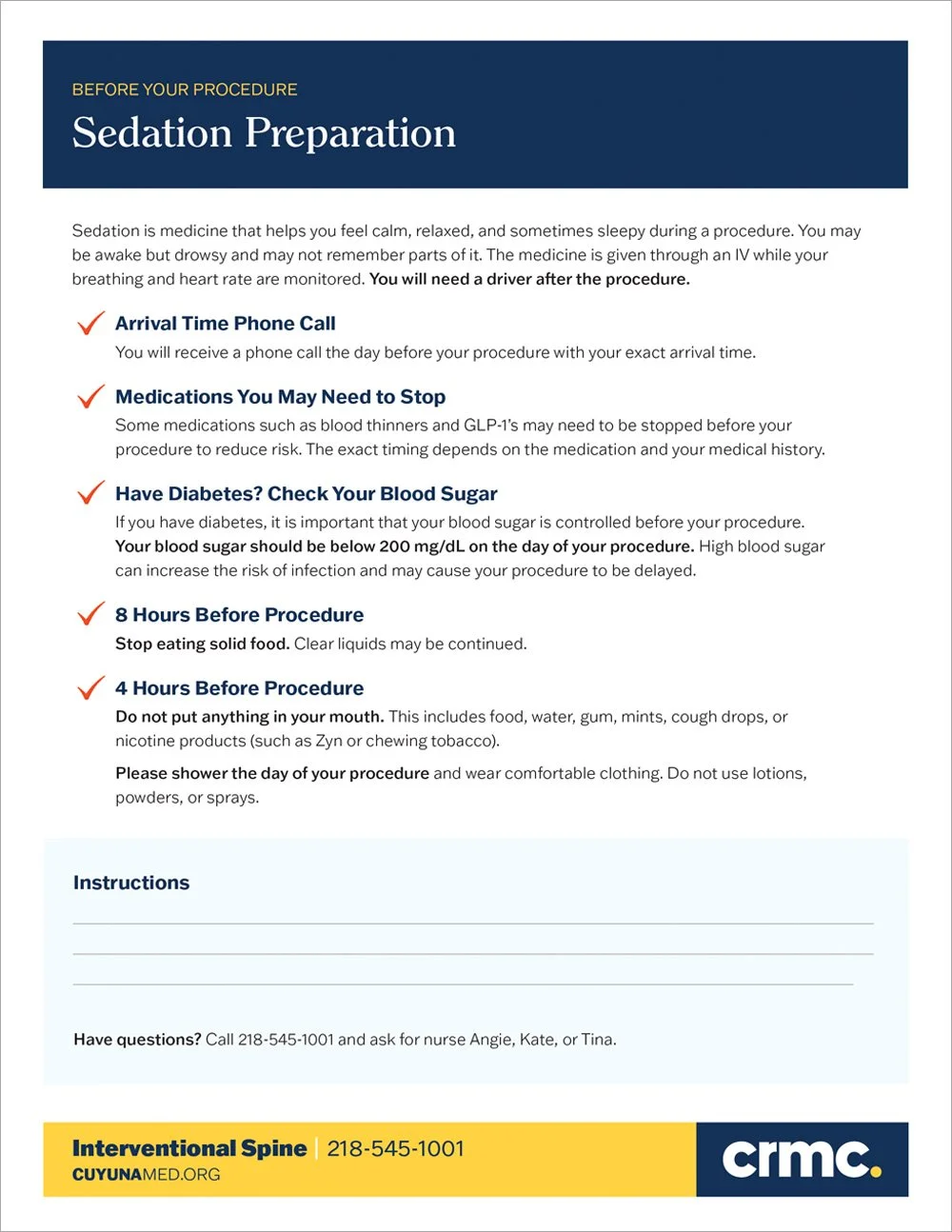
Anesthesia Preparation Instructions
Previously, instructions for both types of anesthesia were combined into one document, requiring patients to determine which information applied to them. Using UX principle of cognitive load reduction, I recommended creating two clear, easy-to-scan instruction sheets based on anesthesia type.
Although the change required stakeholder buy-in, it reduced unnecessary information and gave each patient clear instructions specific to their procedure.
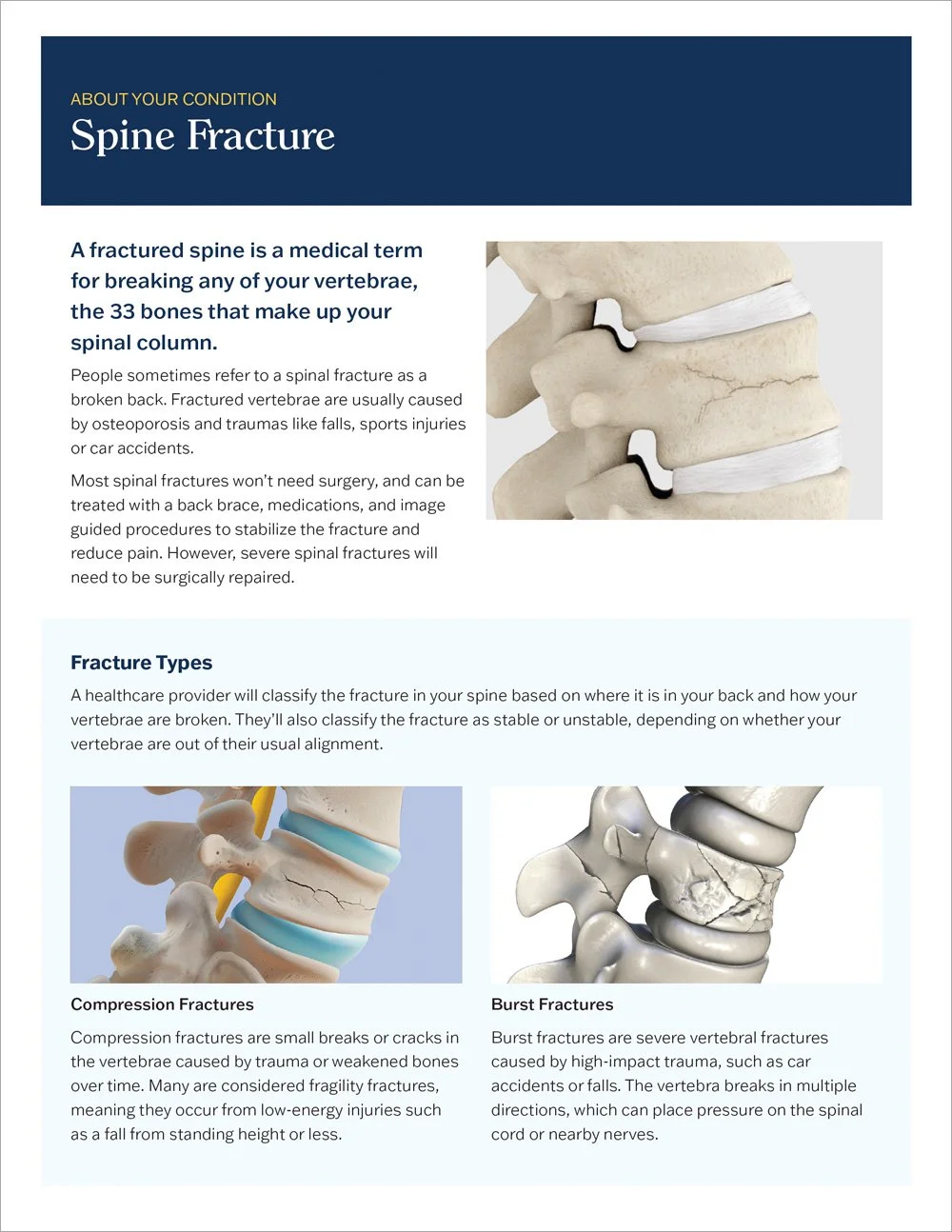
Condition and Treatment-Based Education
Individual handouts were developed to explain each condition and treatment in clear, patient-friendly language.
Physician Introductions
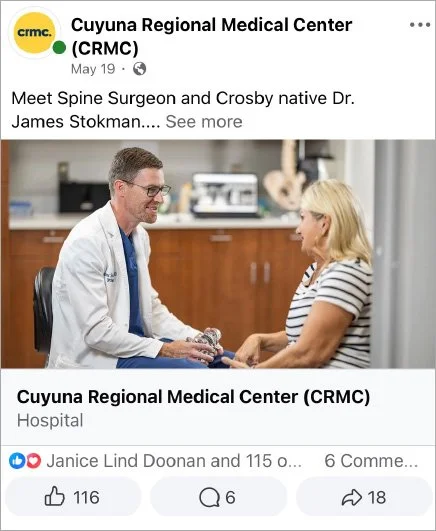
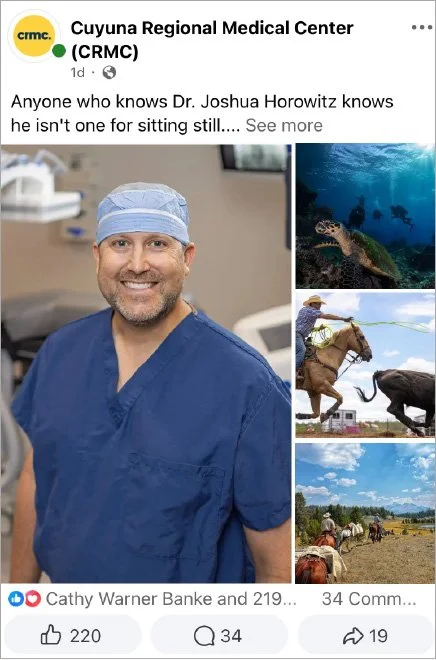
Paid social media posts introduced the physicians to the community. Each post balanced professional credibility with personal interests and personality, helping patients see the person behind the white coat.
Feature Key Differentiator
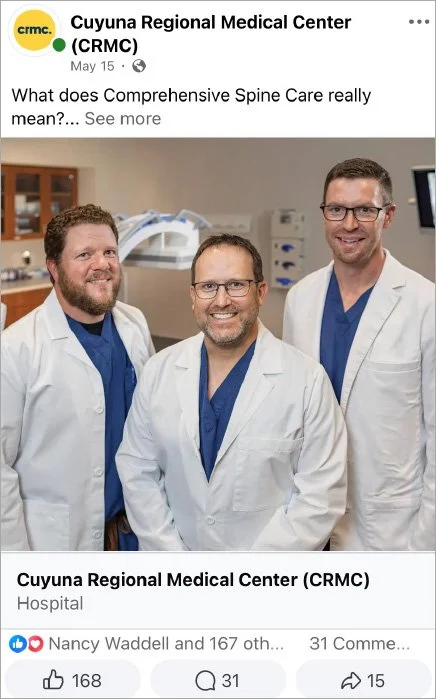
CRMC’s surgical and interventional spine specialists work closely together on patient cases—an important difference from many other healthcare systems. We identified this coordinated approach as a key differentiator and created social content explaining what “Comprehensive Spine Care” means for patients.
Website Edits
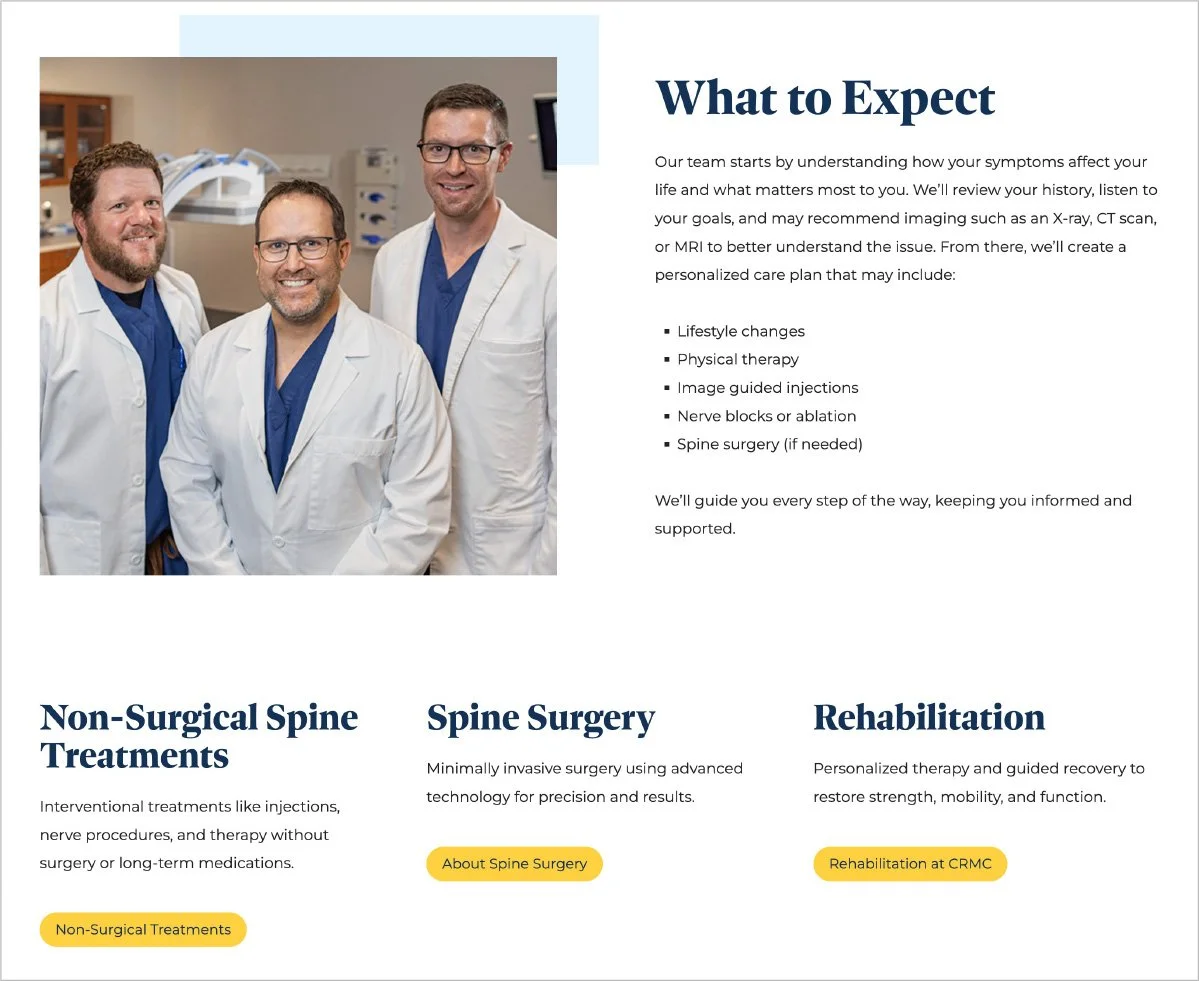
I recommended creating a shared spine landing page that introduces both surgical and non-surgical care. Instead of asking patients to choose the correct specialty on their own, the experience would allow them to request a general spine appointment and let the care team guide them to the right provider.
The organization is currently working to establish a single phone number for both departments, creating a more unified and seamless experience.
The result: A more informed and prepared patient experience
The project created a clearer and more supportive experience for Interventional Spine patients. They now receive relevant materials they can bring home and review at their own pace.
The physician-focused social posts were also well received. Even CRMC employees commented that they learned something new about the physicians. Together, the four featured posts generated approximately 790 reactions, comments, and shares, increasing awareness of CRMC’s physicians and comprehensive approach to spine care.